
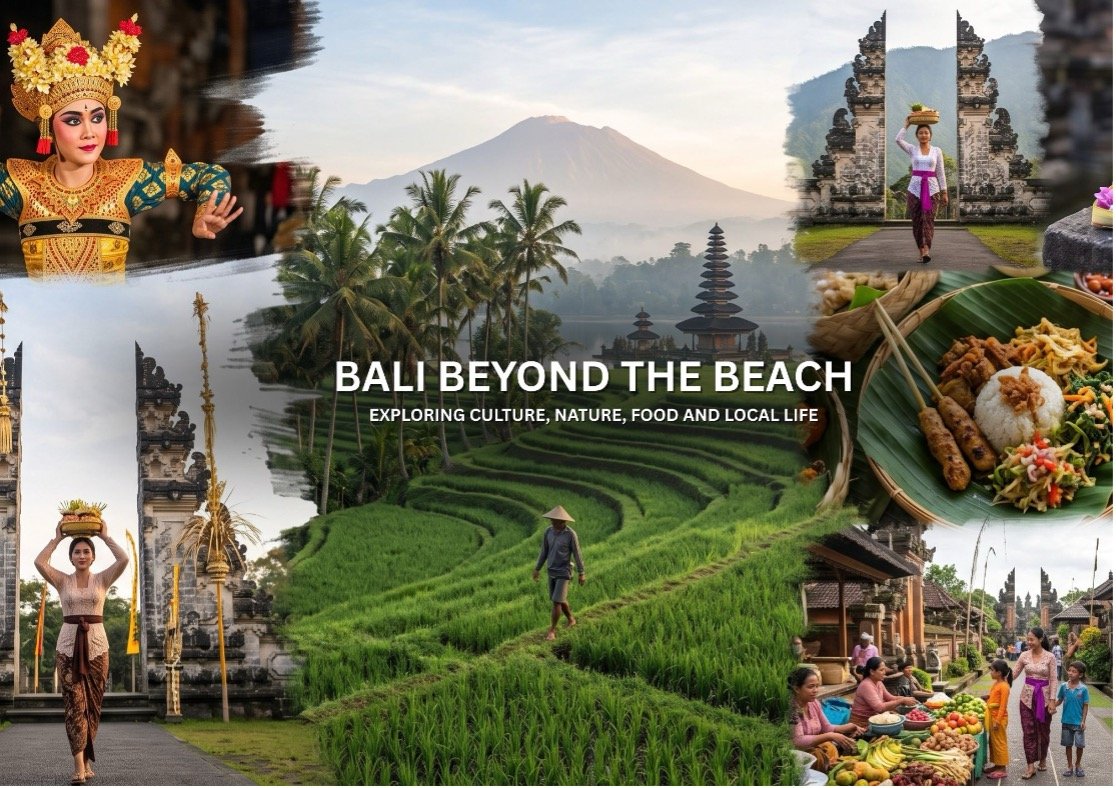
When people imagine Bali, the first images that often come to mind are beaches, tropical sunsets, swimming pools and palm trees. These are certainly part of what makes the island so appealing, but Bali is much more than a beach destination.
Beyond its coastline, Bali offers a rich combination of Hindu culture, traditional ceremonies, rice terraces, mountains, forests, waterfalls, local markets, distinctive cuisine, arts and a way of life that continues to shape the island’s identity. For visitors willing to look beyond the most photographed attractions, these experiences can provide a much deeper understanding of what makes Bali special.
Whether you are visiting Bali for the first time or returning for another holiday, exploring the island beyond its beaches allows you to experience a different side of the destination. You can spend a morning visiting a temple, have lunch featuring traditional Balinese dishes, walk through a rice field in the afternoon and finish the day watching the sunset by the coast.
The beauty of Bali is that these experiences do not have to be separate. They are often connected through the island’s culture, landscape and everyday life.
Bali Is More Than a Beach Destination
Bali’s beaches are undoubtedly one of its biggest attractions. From the busy coastline of southern Bali to quieter stretches of sand further from the main tourist areas, the island offers plenty of opportunities for swimming, surfing, sunset watching and simply relaxing beside the sea.
However, spending your entire holiday around the beach can mean missing some of the experiences that make Bali culturally and geographically distinctive.
The island is relatively compact, yet its landscapes change considerably as you travel. Southern Bali is known for its beaches, restaurants and tourism infrastructure, while central Bali is characterised by hills, valleys, forests and rice-growing landscapes. Further north, the scenery becomes quieter and more mountainous, while eastern Bali offers a different combination of temples, traditional villages and dramatic coastal landscapes.
This variety means that a Bali holiday can be as active or relaxed as you want it to be. You can combine beach time with cultural experiences, nature, food and opportunities to observe everyday life.
Discovering Bali Through Its Culture and Traditions
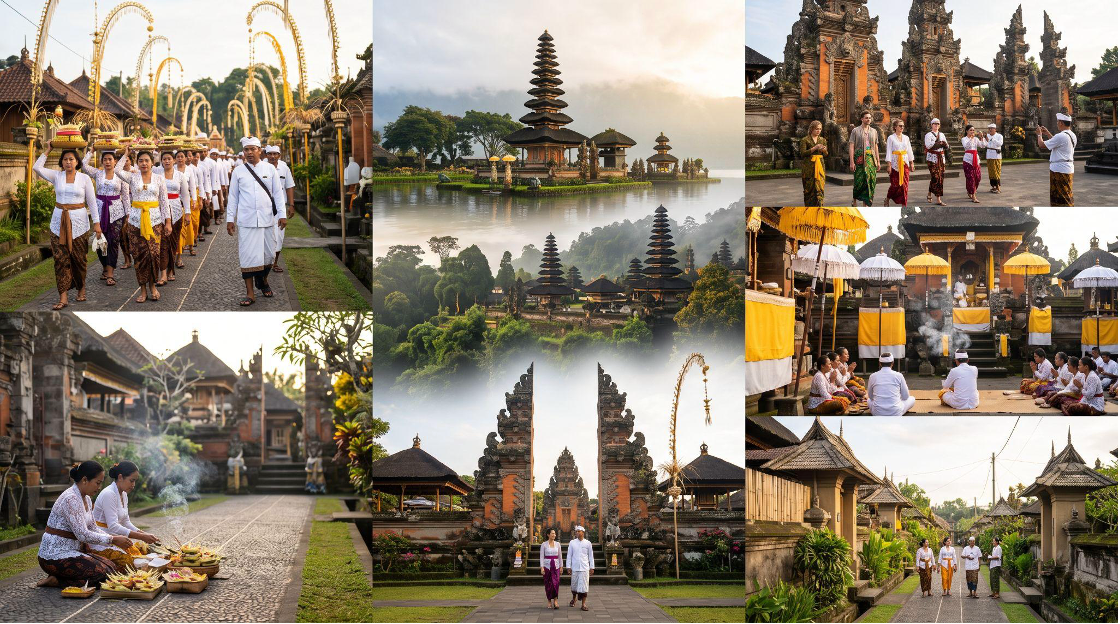
One of the most important ways to understand Bali is through its culture.
Balinese Hinduism has a visible presence throughout the island. Temples can be found beside roads, inside villages, near beaches and within family compounds. Small daily offerings, known locally as canang sari, are placed in many homes, businesses and public spaces as part of everyday religious practice.
For visitors, this means that culture is not limited to a particular attraction or museum. It is part of the environment you experience while travelling around Bali.
Traditional ceremonies are also an important part of Balinese life. Depending on the time of year, visitors may encounter processions, temple celebrations, decorations and community activities. These events can provide a fascinating glimpse into local traditions, but they should always be approached respectfully.
Visitors should remember that temples are places of worship rather than simply tourist attractions. Appropriate clothing, respectful behaviour and following local instructions are important when visiting religious sites. In many temples, visitors may be asked to wear a sarong or other appropriate covering.
Exploring Bali’s culture does not necessarily require a complicated itinerary. Simply visiting a local temple, observing a ceremony from an appropriate distance, exploring a traditional village or learning about Balinese customs can add considerable depth to a holiday.
Bali’s Landscapes: Mountains, Rice Fields and Forests
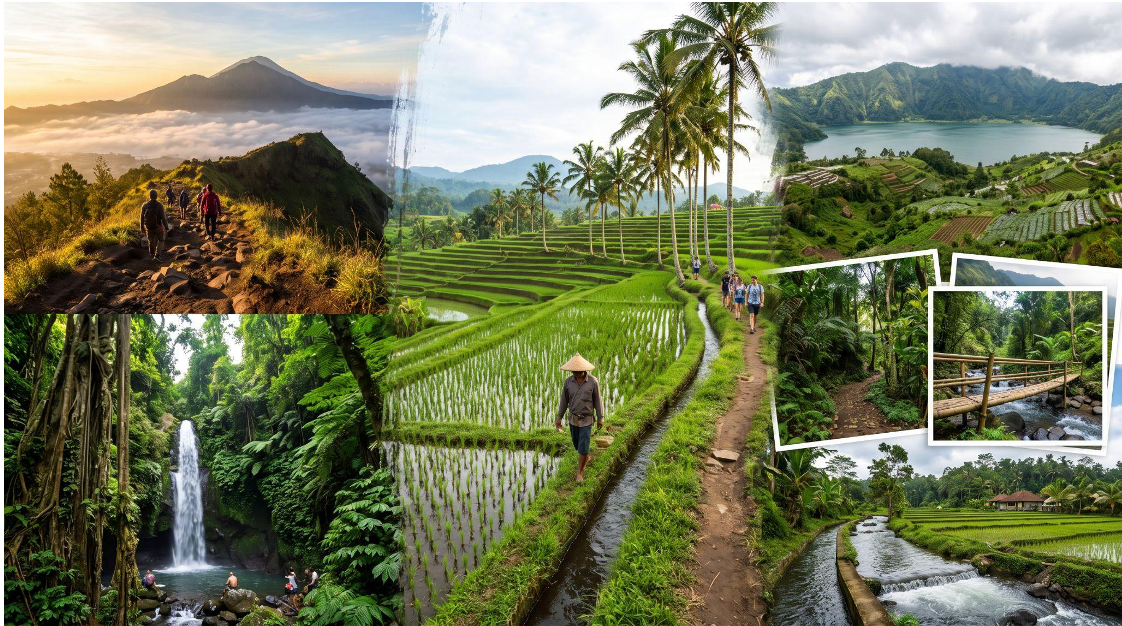
Away from the coastline, Bali’s landscape changes dramatically.
Central Bali is famous for its rice terraces, green valleys and highland scenery. The landscape is closely connected to agriculture, particularly the cultivation of rice, which has played an important role in Balinese communities for generations.
The island’s rice fields are not simply beautiful scenery. They are part of a larger agricultural and cultural system. Traditional irrigation practices, including the subak system, demonstrate how farming, community organisation and religious beliefs have historically been connected in Bali.
For visitors, walking through a rice-growing area can provide a very different experience from spending an afternoon at the beach. Instead of busy tourist streets, you may encounter narrow paths, farmers working in the fields, irrigation channels and villages surrounded by greenery.
Bali is also home to mountains and volcanic landscapes. Mount Agung and Mount Batur are among the island’s best-known volcanoes, and the surrounding areas offer hiking, viewpoints and cooler highland environments.
Further into the island, forests and waterfalls provide opportunities for visitors who enjoy nature. Places such as northern and central Bali can feel noticeably different from the developed southern tourist areas, making them worthwhile additions to a longer itinerary.
Experiencing Bali Through Its Food
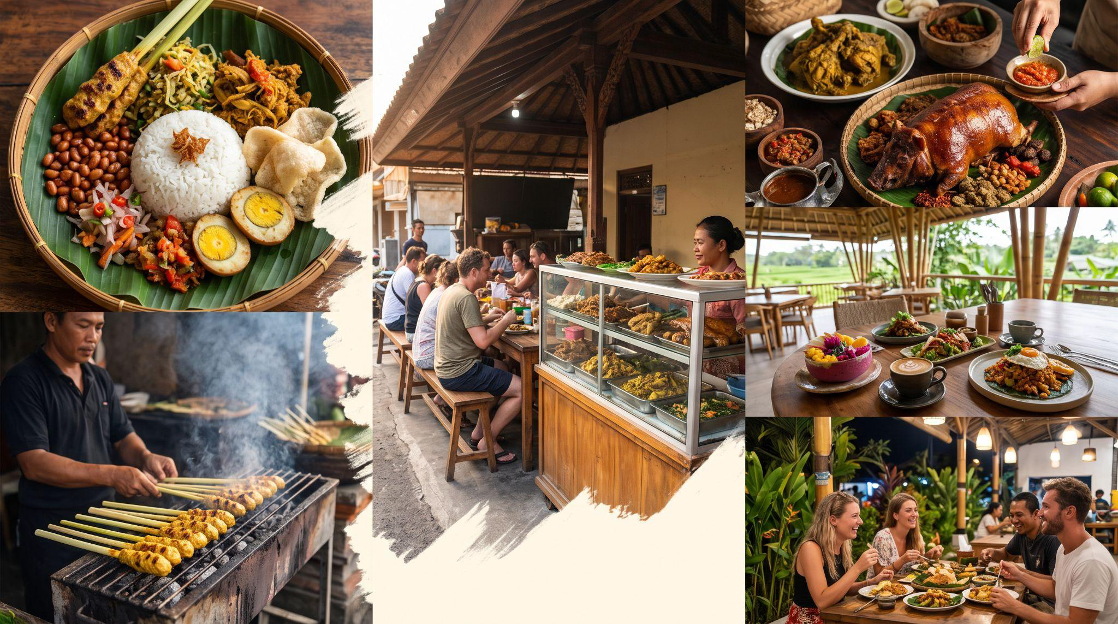
Food is another important way to experience Bali beyond the beach.
Balinese cuisine has its own distinctive flavours, ingredients and cooking traditions. Rice is a staple, while spices, herbs, chilli, coconut and other locally used ingredients contribute to the character of many traditional dishes.
Visitors may encounter dishes such as nasi campur, ayam betutu, lawar, sate lilit and babi guling, although availability and preparation can vary between restaurants and regions.
Nasi campur is particularly useful for visitors who want to try several flavours in one meal. A typical serving may combine rice with different side dishes, vegetables, meat and sambal.
Sate lilit is another well-known Balinese dish. Unlike the more familiar skewered satay found in many parts of Southeast Asia, the mixture is wrapped around a bamboo or lemongrass stick before being grilled.
For travellers who want to understand local food more deeply, eating at a traditional warung can be as valuable as visiting a well-known restaurant. A warung is generally a small, casual food establishment, and these places can offer an opportunity to experience everyday meals in a less formal setting.
At the same time, Bali’s food scene has evolved considerably. Alongside traditional dishes, visitors can find cafés, international restaurants, vegetarian and plant-based menus, modern Indonesian cuisine and dining experiences influenced by food cultures from around the world.
This combination of traditional and contemporary food is one of the reasons Bali has become such an interesting destination for food lovers.
Bali’s Villages and Local Communities
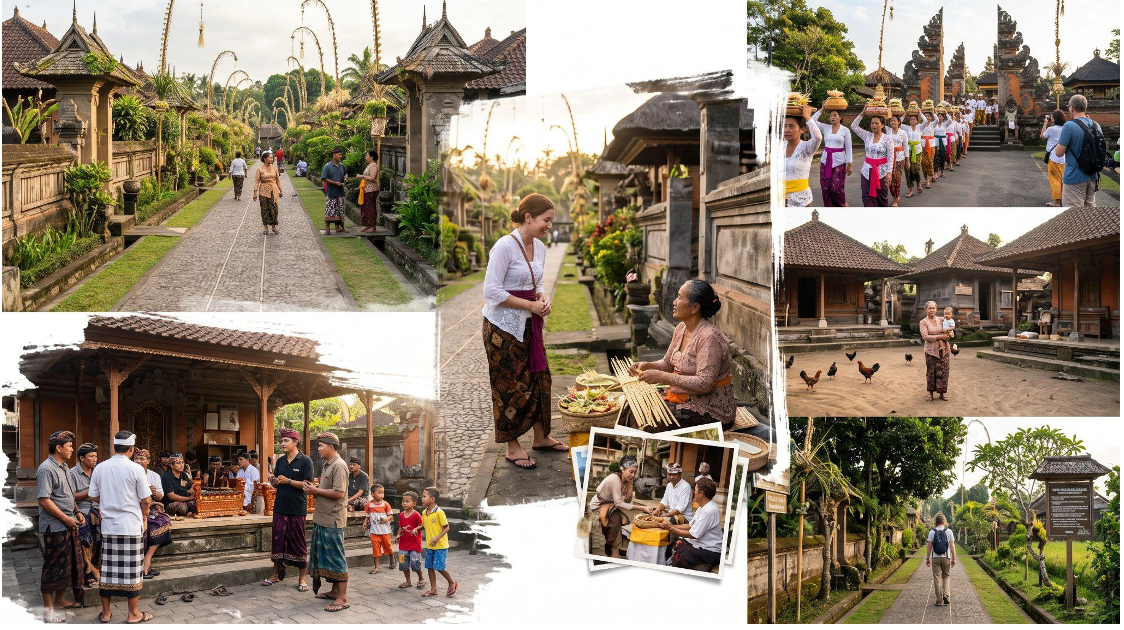
Bali’s villages are closely connected to the island’s social and cultural structure.
Many communities have their own temples, gathering spaces and traditions. Village life can be particularly interesting for travellers who want to understand how Balinese communities operate beyond the tourism industry.
When visiting rural areas, it is important to remember that these are people’s homes rather than open-air attractions. Visitors should avoid entering private spaces without permission, photographing people without consideration and interfering with ceremonies or religious activities.
The best approach is simple: observe respectfully, follow local guidance and remember that you are a guest.
This attitude can make cultural experiences much more meaningful. Instead of treating local life as something to photograph, you begin to understand it as part of the living environment of Bali.
Exploring Different Parts of Bali
One of the advantages of Bali is that different areas can provide very different experiences within the same trip.
Seminyak
Seminyak is one of southern Bali’s most popular destinations and combines beaches with restaurants, cafés, boutiques, spas, beach clubs and private villas. It is particularly suitable for travellers who want a balance between relaxation, dining, shopping and easy access to the coast.
Ubud
Ubud is strongly associated with Balinese art, culture, rice fields, forests and wellness. The surrounding landscape provides a different atmosphere from the developed coastal areas, making it popular with visitors interested in nature and cultural experiences.
Canggu
Canggu has developed into one of Bali’s best-known lifestyle destinations, with cafés, restaurants, surf beaches, fitness studios and a large international visitor community. It offers a more contemporary atmosphere while still being surrounded by traditional villages and agricultural landscapes.
Sanur
Sanur generally offers a calmer coastal experience. Its beachfront promenade, relaxed atmosphere and relatively gentle pace make it popular with families, older travellers and visitors looking for a less hectic base.
Uluwatu and the Bukit Peninsula
Uluwatu and the surrounding Bukit Peninsula are known for dramatic cliffs, ocean views, beaches and sunset experiences. The area has a distinctive landscape compared with the flatter coastal areas around Seminyak and Kuta.
Northern and Eastern Bali
Travellers willing to venture further can discover a quieter side of the island in northern and eastern Bali. These regions offer mountains, waterfalls, traditional villages, temples, diving areas and coastal landscapes with fewer large-scale tourist developments.
This diversity is one reason Bali works for many different types of holidays. You do not have to choose between culture, nature and the beach. You can experience several sides of the island during one trip.
Staying in Seminyak as a Base for Exploring Bali
For travellers who want to experience several sides of Bali while still enjoying the convenience of a well-developed tourist area, Seminyak can be a practical base.
Its location in southern Bali provides access to the beach, restaurants, cafés and shopping, while surrounding areas offer opportunities for day trips and exploration. Depending on your itinerary, you can spend one day enjoying Seminyak’s coastline, another exploring cultural attractions, and another travelling further inland or along the southern coast.
Staying in a Seminyak villa can also provide flexibility between busy sightseeing days.
After spending the day exploring Bali, having a private space to return to can make the holiday feel less rushed. Instead of returning to a single hotel room, families and groups can have separate bedrooms, a shared living area, outdoor space and a private swimming pool.
This can be particularly useful for longer holidays when travellers want to combine exploration with periods of rest.
Staying at Villa Bugis Seminyak
For travellers who want to explore Bali while using Seminyak as their base, Villa Bugis Seminyak offers a collection of private pool villas designed for different group sizes.
The collection includes villas ranging from one to six bedrooms, making it possible to choose accommodation according to whether you are travelling as a couple, family or larger group. The villas provide private spaces where guests can relax between days spent exploring the island.
Seminyak also offers practical advantages for travellers who want variety during their holiday. Guests can enjoy restaurants and cafés, visit the beach, explore nearby areas and then return to the privacy of their villa.
For longer stays, this combination becomes particularly useful. You can have active days exploring Bali without needing to fill every day with sightseeing, allowing the villa to become part of the holiday rather than simply a place to sleep.
The best Bali experience is often a balance between discovering the island and giving yourself enough time to enjoy where you are staying.
Book direct & save more:
📞 +62 812-3683-2838
📍 The Ideal Holiday Villas in Seminyak, Bali


