

Bali Blog

Welcome to our Bali Blog by Villa Bugis. In this comprehensive Bali Blog you will find lots of ideas on what to do, where to go, and what and where to eat and drink in Bali. We also give some great Villa Rental tips!

Check out our Bali blog to give you some ideas for:

  • Activities in Bali
  • Bali Destination Guide
  • Giving Back
  • Eat And Drink
  • Villa Rental Tips

Welcome to the best Bali Blog!

Private pool villa in Seminyak Bali surrounded by tropical gardens and others seminyak attraction

What Makes Seminyak One of the Best Places to Stay in Bali?

Choosing the right area to stay in Bali can make a significant difference to your holiday experience. While the island offers many popular destinations, Seminyak remains one of the best places to stay in Bali for travellers who want a combination of beautiful beaches, excellent restaurants, shopping, nightlife, and convenient access to other attractions. Located on Bali’s southwest coast, Seminyak is known for its relaxed coastal atmosphere, stylish dining spots, boutique shops, and a wide selection of accommodation. From luxury resorts and boutique hotels to spacious private villas, the area offers options for couples, families, and groups travelling together. Whether you are visiting Bali for the first time or returning for another holiday, Seminyak provides a convenient base for enjoying the island while experiencing its vibrant lifestyle. 1. A Convenient Location for Exploring Bali One of the biggest advantages of staying in Seminyak is its central location on Bali’s southwest coast. The area offers convenient access to several popular destinations, making it easier to explore different parts of the island during your holiday. Seminyak is located close to Legian and Kuta to the south, while Canggu is just north of the area. Travellers can also arrange day trips to cultural attractions, temples, beach clubs, and scenic destinations across Bali. Some popular nearby destinations include: Kuta and Legian: Known for their beaches, shopping areas, and lively entertainment. Canggu: Popular for its surf spots, cafes, restaurants, and relaxed atmosphere. Petitenget: A well-known part of Seminyak with beach clubs, restaurants, and sunset spots. Ubud: A cultural destination known for its rice terraces, art, temples, and natural scenery. It is further inland and generally requires a longer drive. This location makes Seminyak a practical choice for travellers who want to enjoy the beach, explore Bali, and still have plenty of restaurants and facilities within easy reach. 2. Beautiful Beaches and Stunning Bali Sunsets Seminyak is especially popular with travellers who enjoy spending time by the beach. Its coastline offers wide sandy beaches, open ocean views, and a relaxed atmosphere throughout the day. Seminyak Beach is one of the area’s main attractions. Visitors can enjoy morning walks, swimming when sea conditions are suitable, surfing, or simply relaxing by the shore. As the afternoon approaches, the beach becomes one of the best places to watch the sunset. The sky often changes into shades of orange, pink, and purple, creating a memorable backdrop for an evening in Bali. Other nearby beaches include: Petitenget Beach: A popular spot near some of Seminyak’s well-known restaurants and beach clubs. Double Six Beach: Known for its lively atmosphere, beachfront cafés, and sunset views. Batu Belig Beach: A more relaxed beach area north of central Seminyak. For travellers looking for a Bali holiday that combines beach activities, dining, and beautiful sunsets, Seminyak offers plenty of opportunities to enjoy the island’s coastal lifestyle. 3. Excellent Restaurants, Cafes, and Local Food Another reason Seminyak is one of the best areas to stay in Bali is its diverse food scene. The area has everything from traditional Indonesian restaurants and local warungs to international dining venues, stylish cafés, and beachfront restaurants. Travellers can enjoy a wide range of cuisines, including Indonesian, Balinese, Italian, Japanese, Mediterranean, and Australian-inspired dishes. Seminyak is also a great place to discover Bali’s local food. Visitors can try traditional dishes such as nasi campur, sate lilit, ayam betutu, and babi guling while exploring local restaurants around the area. For breakfast and casual dining, the area is filled with cafes serving fresh coffee, tropical fruit bowls, pastries, and international breakfast menus. Many restaurants and cafes are also within walking distance of central Seminyak accommodation, making it convenient to enjoy different dining experiences without travelling far. 4. Shopping, Boutiques, and Lifestyle Experiences Seminyak is well known for its shopping scene, particularly its independent boutiques, fashion stores, homeware shops, and local designer brands. Unlike some areas that focus mainly on traditional markets, Seminyak offers a mix of contemporary shopping and local craftsmanship. Visitors can browse clothing, accessories, jewellery, handmade products, and unique souvenirs. Popular shopping areas include: Jalan Kayu Aya: Also known as Eat Street, this area is lined with restaurants, boutiques, and lifestyle shops. Jalan Raya Seminyak: A busy shopping street with fashion stores, supermarkets, and everyday conveniences. Jalan Petitenget: Known for its restaurants, boutiques, and stylish lifestyle venues. Beyond shopping, visitors can also enjoy spa treatments, beauty salons, yoga studios, and wellness experiences throughout the area. This variety makes Seminyak particularly appealing to travellers who want more than just a beach holiday. 5. A Wide Selection of Villas and Accommodation One of the main reasons travellers choose Seminyak is its variety of accommodation. The area offers everything from hotels and resorts to private pool villas with spacious living areas and tropical gardens. For travellers who value privacy, comfort, and flexibility, staying in a villa in Seminyak can be an excellent option. Unlike a standard hotel room, a private villa often provides separate bedrooms, a private swimming pool, an outdoor garden, and shared living and dining spaces. These features make villas especially suitable for families, couples, and groups who want to spend quality time together. When choosing a Seminyak Bali villa, consider the following: Villa size: Choose the number of bedrooms based on your group size and preferred level of privacy. Private swimming pool: A private pool allows you to relax and enjoy your holiday at your own pace. Location: Staying in central Seminyak makes it easier to reach restaurants, shops, and entertainment. Living spaces: Spacious living and dining areas are useful for families and groups travelling together. Staff and services: Check what services are included, such as housekeeping, breakfast arrangements, or assistance from the villa team. Seminyak has accommodation options for different budgets and travel styles, from affordable stays to luxury private villas. 6. Ideal for Families, Couples, and Groups Seminyak is a versatile destination because it offers experiences for different types of travellers. For families, private villas can provide more space than standard hotel rooms. Multiple bedrooms, private swimming pools, gardens,

Read More »
Private pool villa in Seminyak Bali surrounded by tropical gardens

Booking a Seminyak Villa Bali: Direct Booking Benefits and What to Know

Planning a holiday seminyak villa Bali involves more than choosing travel dates and booking flights. Finding the right accommodation is equally important, especially if you want to enjoy privacy, comfort, and flexibility throughout your stay. For travellers looking for a relaxing island experience, booking a private villa in Seminyak Bali is an excellent option. Seminyak is one of Bali’s most popular holiday destinations, offering a combination of beautiful beaches, international restaurants, boutique shopping, cafes, and vibrant local experiences. Staying in a private villa allows you to enjoy everything the area has to offer while having your own peaceful space to return to after a day of exploring. However, with so many accommodation options and booking platforms available, knowing how to choose the right villa and where to make your reservation can make a significant difference. From comparing villa facilities and understanding booking conditions to enjoying the benefits of direct reservations, here is everything you should know before booking a Seminyak villa in Bali. Why Choose a Private Villa in Seminyak Bali? Seminyak offers a different holiday experience compared with many other destinations in Bali. It combines a relaxed coastal atmosphere with convenient access to restaurants, shopping areas, beach clubs, and local attractions. This makes it particularly appealing to couples, families, and groups of friends who want to enjoy different experiences without travelling too far. Choosing a private villa in Seminyak provides more than just a place to sleep. Unlike a standard hotel room, a villa generally offers private living spaces, individual bedrooms, tropical gardens, and a swimming pool that you can enjoy without sharing it with other guests. For families, having multiple bedrooms and shared living areas makes spending time together more comfortable. Couples can enjoy a quieter and more private setting, while larger groups can stay together in one property rather than booking several hotel rooms. Another advantage is flexibility. You can spend a morning enjoying breakfast at your villa, relax beside your private swimming pool in the afternoon, and head out to explore Seminyak’s restaurants or beaches in the evening. This combination of privacy and convenience is one of the reasons private villas remain a popular accommodation choice for Bali holidays. What to Consider Before Booking a Seminyak Villa Finding the right Seminyak villa involves more than comparing photographs and nightly rates. Every property offers different facilities, layouts, and services, so it is important to consider what will make your stay comfortable. Location and Accessibility Location is one of the most important factors when choosing accommodation. Consider how close the villa is to beaches, restaurants, supermarkets, shopping areas, and other places you plan to visit. Staying in central Seminyak can make it easier to explore the surrounding neighbourhood while reducing the need for long journeys. However, it is also worth checking the villa’s specific location, as some properties are situated along quieter residential streets away from the main roads. Bedroom Configuration and Guest Capacity Think about the number of people travelling and how much private space everyone needs. A one-bedroom villa may be ideal for couples, while families and larger groups may prefer properties with three, four, or more bedrooms. It is also important to check whether the bedroom arrangement suits your group, particularly when travelling with children or multiple generations of family members. Private Swimming Pool and Villa Facilities A private swimming pool is one of the main attractions of staying in a Seminyak villa. It provides a convenient place to relax, enjoy the tropical weather, and spend quality time with family or friends. Other facilities worth checking include spacious living areas, kitchen facilities, outdoor dining spaces, air-conditioned bedrooms, and comfortable bathrooms. Services and Booking Inclusions Not all villa rates include the same services. Before confirming your reservation, check whether breakfast, daily housekeeping, airport transfers, or other additional services are included or available upon request. Understanding these inclusions helps you compare accommodation options more accurately and avoid unexpected expenses during your holiday. Payment and Cancellation Policies Always review the booking conditions before making a payment. Check the deposit requirements, payment deadlines, cancellation policies, and any applicable charges for changes to your reservation. Booking with a clear understanding of these conditions helps you plan your holiday with greater confidence. Direct Booking vs Online Travel Agents: Which Is Better? When searching for a Seminyak villa in Bali, you will likely come across online travel agencies (OTAs) such as Booking.com and other accommodation platforms. These websites make it convenient to compare different properties, review guest feedback, and explore available dates. However, booking directly through a villa’s official website offers a different experience. Instead of arranging your reservation through a third-party platform, you communicate directly with the accommodation provider. One of the main advantages of direct booking is access to the property’s own booking information and reservation team. You can ask specific questions about bedroom configurations, facilities, availability, and services before confirming your stay. For travellers who need assistance choosing between several villas, direct communication can make the decision easier. It also provides an opportunity to discuss specific travel requirements, particularly for families and larger groups. At Villa Bugis Seminyak, guests who book directly through our official website are guaranteed our best available rates. This means you can enjoy the benefit of booking directly while receiving assistance from our reservation team throughout the reservation process. Benefits of Booking Directly with Villa Bugis Seminyak Choosing direct booking with Villa Bugis gives you a more straightforward way to arrange your accommodation and communicate your holiday requirements. Here are some of the advantages: Guaranteed Best Available Rates When you book directly through the official Villa Bugis website, you are guaranteed our best available rates. This allows you to make your reservation with confidence while avoiding the need to compare multiple third-party booking channels. Personalised Assistance from Our Reservation Team Every holiday has different requirements. Whether you need a one-bedroom villa for a couple, a family villa with several bedrooms, or a larger property for a group of friends, our reservation team can help

Read More »
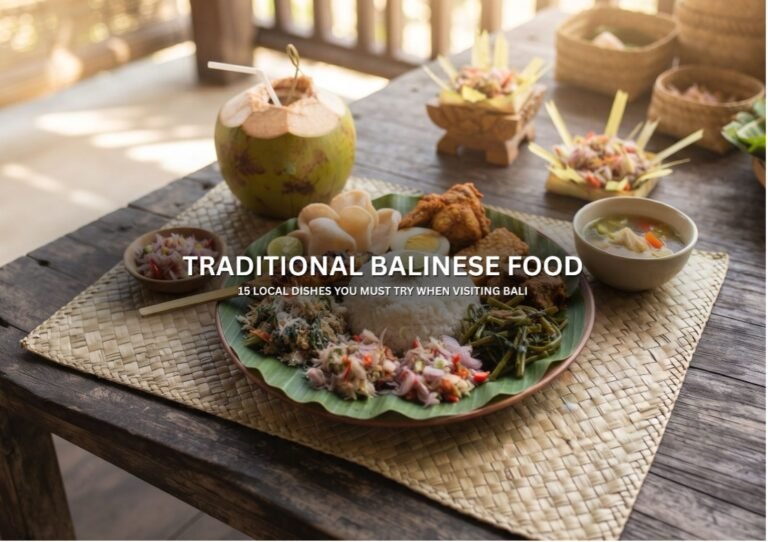
Traditional Balinese food featuring nasi campur, sate lilit, lawar and sambal matah

Traditional Balinese Food: 15 Local Dishes You Must Try When Visiting Bali

A trip to Bali is about more than beautiful beaches, tropical landscapes, and relaxing days by the pool. One of the best ways to experience the island is through its traditional food. From richly spiced slow-cooked chicken to freshly grilled satay and colourful local desserts, Balinese cuisine offers a variety of flavours that reflect the island’s culture, ingredients, and culinary traditions. Traditional Balinese food is known for its aromatic spices, fresh herbs, grated coconut, and distinctive sambal. Many dishes are prepared using base genep, a traditional Balinese spice paste made with ingredients such as shallots, garlic, turmeric, ginger, galangal, and other local spices. These ingredients create the complex flavours that make Balinese cooking different from other regional cuisines in Indonesia. Whether you are visiting Bali for the first time or returning for another holiday, exploring local food is an enjoyable way to discover the island beyond its tourist attractions. You can experience traditional dishes at family-run warungs, local markets, and restaurants throughout Bali, including the popular holiday destination of Seminyak. If you are wondering what traditional Balinese food to try during your visit, here are 15 local dishes worth adding to your culinary itinerary. 1. Babi Guling: Traditional Balinese Roast Pork Babi guling is one of the most famous traditional Balinese dishes and is often considered a signature of the island’s cuisine. The dish consists of a whole pig seasoned with a mixture of Balinese spices, then slowly roasted over an open fire until the skin becomes golden and crispy while the meat remains tender and flavourful. The seasoning often includes turmeric, coriander, lemongrass, garlic, shallots, and other aromatic ingredients. Traditionally associated with religious ceremonies and special gatherings, babi guling has also become a popular everyday meal served at specialist local eateries. A typical serving may include slices of roast pork, crispy skin, rice, lawar, and sambal. The combination of crunchy skin, tender meat, and fragrant spices creates a rich and satisfying meal. For visitors exploring traditional Balinese food, babi guling is a dish worth experiencing. It is widely available at dedicated babi guling warungs, although recipes and accompanying dishes vary between establishments. Good to know: Babi guling contains pork and is not suitable for those following a halal diet. 2. Ayam Betutu: Slow-Cooked Balinese Spiced Chicken Ayam betutu is a traditional chicken dish recognised for its rich seasoning and slow cooking process. The chicken is coated or filled with a fragrant spice mixture, often featuring the traditional base genep, before being wrapped in leaves and cooked until the meat becomes tender. The long cooking process allows the spices to penetrate the chicken, producing a deeply savoury flavour with aromatic notes of ginger, turmeric, garlic, and galangal. Depending on the recipe, ayam betutu can range from moderately spiced to quite hot. The dish is commonly served with steamed rice and vegetable accompaniments, making it a complete meal for lunch or dinner. Some versions are particularly spicy, so visitors who prefer milder flavours can ask about the seasoning before ordering. Ayam betutu is an excellent introduction to Balinese cuisine because it showcases the island’s traditional spice combinations and cooking techniques in one dish. 3. Bebek Betutu: Traditional Slow-Cooked Duck Bebek betutu is the duck version of betutu and is known for its tender texture and aromatic spices. Traditionally, the duck is carefully seasoned, wrapped in leaves, and cooked slowly for several hours so the flavours develop throughout the meat. Compared with chicken, duck has a richer flavour that pairs particularly well with Balinese spices. When prepared using traditional methods, the meat becomes soft and absorbs the fragrant seasoning. Bebek betutu is often associated with special meals and traditional cooking, although it can also be found at restaurants specialising in Balinese cuisine. Because preparation takes time, some establishments require advance notice when serving whole ducks. For travellers who enjoy exploring local food, bebek betutu offers a different way to experience the island’s traditional cooking beyond the more familiar chicken dishes. 4. Sate Lilit: Balinese Minced Satay Sate lilit is one of the most distinctive examples of traditional Balinese food. Unlike satay made from chunks of meat threaded onto skewers, sate lilit uses minced or finely ground ingredients mixed with grated coconut, herbs, and spices. The mixture is shaped around a flat bamboo stick or a stalk of lemongrass before being grilled over charcoal. As it cooks, the outside develops a lightly smoky flavour while the inside remains moist and tender. Fish is a popular ingredient, particularly in coastal areas, although chicken and pork versions are also common. The exact seasoning varies, but aromatic herbs, coconut, and Balinese spice mixtures give the dish its characteristic taste. Sate lilit is often served alongside rice, vegetables, or other traditional dishes. It is also a convenient option for travellers who want to sample Balinese flavours in smaller portions rather than ordering a large meal. When visiting Seminyak, look for sate lilit on menus at Indonesian restaurants and local eateries. 5. Nasi Campur Bali: A Taste of Several Dishes in One Meal If you want to try several local dishes without ordering them separately, nasi campur Bali is an excellent choice. This popular meal consists of steamed rice served with a selection of small portions of vegetables, meat, eggs, and traditional accompaniments. A typical Balinese version may include shredded spiced chicken, sate lilit, lawar, peanuts, vegetables, and sambal. The exact combination depends on the cook and the dishes available that day. One of the best things about nasi campur is the variety of flavours and textures on a single plate. You might enjoy tender meat, crunchy vegetables, fragrant rice, and spicy sambal in the same meal. Nasi campur is widely available at warungs and restaurants throughout Bali, including Seminyak. It is particularly suitable for first-time visitors who want an introduction to Balinese food without having to choose just one speciality. If you are unsure what to order at a local eatery, nasi campur is a practical place to start. 6. Lawar: A Traditional Mix of Vegetables,

Read More »
Fresh tropical fruits in Bali including mangosteen, rambutan, mango and salak

Tropical Fruits in Bali: 12 Local Fruits to Try During Your Bali Holiday

A Bali holiday is not only about beautiful beaches, tropical weather, and relaxing days by the swimming pool. It is also an opportunity to discover the island through its local food, traditional markets, and fresh tropical produce. Among the many culinary experiences Bali has to offer, tasting locally grown tropical fruits is one of the simplest and most enjoyable ways to experience everyday island life. Thanks to Bali’s warm tropical climate and fertile volcanic soil, the island produces a wide variety of fruits throughout the year. From sweet and refreshing mangoes to the distinctive taste of salak, also known as snake fruit, many local fruits offer flavours and textures that visitors may not encounter regularly at home. Whether you are exploring traditional markets, enjoying breakfast at your private villa, or stopping at a local fruit stall around Seminyak, trying fresh tropical fruit can add something special to your Bali holiday. Here are 12 local fruits worth discovering during your stay. 1. Salak (Snake Fruit) Salak, commonly known as snake fruit, is one of the most recognisable tropical fruits in Indonesia. Its name comes from the reddish-brown skin, which has a distinctive scale-like appearance resembling snake skin. Once peeled, the fruit reveals several pale segments with a crisp texture and a flavour that combines sweetness with a slight tanginess. Salak is particularly interesting for first-time visitors because its texture is different from many familiar fruits. It is firm, slightly crunchy, and easy to eat without much preparation. Bali is also known for Salak Bali, with Salak Sibetan from Karangasem being one of the island’s well-known varieties. For travellers enjoying a Bali holiday, salak is an excellent fruit to try at a traditional market or purchase from a local fruit vendor. It is also convenient to enjoy as a light snack between sightseeing activities. 2. Mangosteen Often called the queen of fruits, mangosteen is loved for its delicate sweetness and refreshing flavour. Its thick purple outer skin protects soft, white segments inside, which have a juicy texture and a gentle balance of sweetness and acidity. Mangosteen is especially enjoyable when served chilled on a warm tropical afternoon. The fruit is not overly sweet, making it a refreshing option after spending time outdoors or exploring Bali’s beaches. Although mangosteen availability depends on the season, it is commonly associated with Indonesia’s tropical fruit harvest. Visitors may find it at traditional markets, fruit shops, and local vendors, particularly during the main harvest period. 3. Rambutan Rambutan is a colourful tropical fruit that immediately catches the eye. Its red or yellow skin is covered with soft, hair-like strands, while the inside contains translucent white flesh surrounding a central seed. The flavour is sweet, juicy, and refreshing, with a texture somewhat similar to lychee. Despite its unusual appearance, rambutan is easy to enjoy once peeled. Simply open the outer skin and eat the soft flesh inside. During certain fruit seasons, rambutan can be found in large quantities at local markets across Bali. It is an enjoyable fruit to share with family and friends, especially when served fresh as part of a tropical breakfast or afternoon snack. 4. Mango Mango is one of the most familiar tropical fruits, but tasting a locally grown mango in Bali can be a different experience. Depending on the variety and ripeness, Balinese mangoes can be exceptionally sweet, fragrant, and juicy. Mangoes are commonly enjoyed fresh, sliced into small pieces, blended into smoothies, or served as part of a fruit platter. Their natural sweetness makes them a popular breakfast choice, particularly when paired with yoghurt or other tropical fruits. For visitors staying in Seminyak, fresh mango is relatively easy to find at supermarkets, fruit shops, and traditional markets. It is a simple way to enjoy the flavours of the tropics without having to travel far from your accommodation. 5. Dragon Fruit Dragon fruit, known for its vibrant pink or yellow skin and distinctive appearance, is another popular fruit found throughout Bali. The most familiar variety has white or deep magenta flesh dotted with tiny black seeds. Its flavour is mild and subtly sweet, with a refreshing texture similar to a combination of kiwi and pear. Dragon fruit also has a high water content, making it particularly enjoyable in Bali’s warm weather. You will often find dragon fruit served in smoothie bowls, fresh juices, fruit platters, and breakfast menus at cafés around Seminyak. It is a colourful addition to a relaxed tropical breakfast before heading out to explore the island. 6. Banana Bananas are an everyday staple across Bali and come in several varieties, each with its own flavour and texture. Some are small and particularly sweet, while others are larger and commonly used in traditional Indonesian cooking. Beyond eating them fresh, bananas are also used in many local snacks and desserts. Pisang goreng, or fried banana, is a popular Indonesian treat, while banana-leaf wrapping is commonly used to prepare and serve various traditional foods. During your Bali holiday, you may encounter bananas at breakfast, local food stalls, traditional markets, and roadside shops. Their versatility makes them one of the easiest local fruits to discover. 7. Papaya Papaya is widely enjoyed in Bali, particularly as part of a tropical breakfast. When ripe, its orange flesh is soft, naturally sweet, and easy to eat. Its mild flavour makes it a pleasant option for visitors who prefer something light and refreshing. Papaya is commonly served sliced alongside watermelon, pineapple, banana, and other seasonal fruits. Many hotels, cafés, and private villas include fresh papaya in their breakfast selections. For families travelling with children, papaya can also be a convenient fruit to enjoy between activities. It is easy to prepare and works well as part of a simple fruit platter. 8. Pineapple Fresh pineapple is a favourite throughout tropical Indonesia, and Bali is no exception. Known for its bright yellow flesh, juicy texture, and sweet-tangy flavour, pineapple is particularly refreshing when served cold. Unlike some imported fruit products, freshly cut pineapple offers a naturally vibrant taste that

Read More »
Affordable luxury villas Seminyak Bali with a private swimming pool and tropical garden

Affordable Luxury: Finding the Best-Value Villas Seminyak Bali 2026

Finding the right accommodation is an important part of planning a Bali holiday, especially when you want comfort, privacy, and a convenient location without spending more than necessary. Fortunately, affordable luxury is possible when you know what to look for. The best-value villas in Seminyak Bali combine practical facilities, comfortable living spaces, and access to popular attractions, allowing you to enjoy your holiday without compromising on the experience. Seminyak is one of Bali’s most popular destinations for travellers who appreciate good restaurants, boutique shopping, beach sunsets, and a relaxed tropical atmosphere. Its accommodation options range from compact private retreats to spacious multi-bedroom villas with swimming pools and tropical gardens. With so many choices available, the challenge is not simply finding a low price but identifying a villa that offers the right balance of cost, facilities, and location. Whether you are travelling as a couple, planning a family holiday, or sharing a trip with friends, this guide explains how to find affordable luxury, what to compare when choosing Seminyak villas, and how to make your accommodation budget go further. What Does Affordable Luxury Mean When Choosing Villas in Seminyak Bali? Affordable luxury does not necessarily mean choosing the cheapest accommodation available. It means finding a property that provides the features you value most at a price that makes sense for your holiday. For some travellers, value comes from having a private swimming pool and a peaceful garden. For others, it means having enough bedrooms for the entire family, comfortable shared living spaces, or a location that reduces the time and cost of travelling between attractions. When comparing villas Seminyak Bali, consider the complete experience rather than the advertised nightly rate alone. A villa with a slightly higher price may offer better value if it provides the right number of bedrooms, useful facilities, and convenient access to restaurants, shops, and the beach. A practical way to evaluate value is to ask three questions: Does the villa have the facilities and space I actually need? Is the location convenient for the places I want to visit? Does the total booking cost fit my budget, including any additional charges? The answers can help you distinguish between a villa that simply looks attractive online and one that genuinely suits your travel plans. How to Find the Best-Value Seminyak Villas The best-value villa is not always the one with the lowest nightly rate. Instead, look for accommodation that combines the right facilities, location, and overall cost for your needs. 1. Choose the Right Number of Bedrooms Start by determining how many bedrooms your group needs. Booking a villa that is much larger than necessary may increase your accommodation costs, while choosing one that is too small can make the holiday less comfortable. One-bedroom villas may suit couples or solo travellers. Two- and three-bedroom properties can be practical for small families or groups of friends, while larger villas may suit extended families and bigger groups. When comparing prices, consider the cost per guest as well as the total rate. A multi-bedroom villa may provide good value when shared by several people, particularly if everyone can stay comfortably in one property. Before booking, confirm the maximum occupancy, bed arrangements, bathroom facilities, and any additional charges for extra guests. 2. Prioritise Facilities You Will Actually Use A long list of amenities may look impressive, but not every feature will be important for every traveller. To find better value, focus on the facilities that will make a meaningful difference to your stay. A private swimming pool is a major attraction for many visitors to Bali. It provides a convenient place to cool off, relax after exploring, or enjoy a quiet morning without leaving the property. A tropical garden and comfortable outdoor seating can make the accommodation more enjoyable, while well-equipped bedrooms and living spaces help create a comfortable environment for longer stays. Other facilities worth checking include air conditioning, Wi-Fi, housekeeping, staff assistance, and dining arrangements. Confirm which services are included in the rate and which may incur additional charges. For families, practical features such as bedroom layouts, pool access, and suitable sleeping arrangements may be more valuable than decorative extras. For couples, privacy and atmosphere may be higher priorities. Choosing a villa based on your actual needs can help you avoid paying for facilities you are unlikely to use. 3. Consider Location and Transport Costs Location plays an important role in the overall value of a villa holiday. A property with a lower nightly rate may be less economical if it requires frequent, lengthy journeys to the places you want to visit. Seminyak offers access to restaurants, cafes, shopping, wellness experiences, and the beach. However, the distance to these places varies between properties, even when they are all described as Seminyak villas. Before booking, identify the attractions and activities that matter most to your group. If you expect to dine out frequently, consider how easily you can reach restaurants. If beach visits are a priority, check the actual distance and available transport options. You should also consider traffic when planning journeys around Bali. A convenient base can help reduce time spent travelling and leave more time for enjoying your holiday. The goal is not necessarily to choose the villa closest to every attraction. It is to find a location that balances convenience, atmosphere, and accommodation cost. 4. Compare the Total Booking Price The advertised nightly rate is only one part of the cost of a villa holiday. Depending on the property and booking channel, additional charges, taxes, service fees, or optional services may affect the final amount. When comparing affordable villas Seminyak, check the total price for your entire stay. Review the booking conditions, minimum-stay requirements, cancellation policy, and what is included. If you are travelling with family or friends, compare the overall accommodation cost rather than looking only at the per-person amount shown in a search result. It is also worth checking whether breakfast, airport transfers, housekeeping, or other services are included. A property with a higher

Read More »
Private pool villa in Seminyak Bali with a tropical garden for a relaxing holiday

Villas Seminyak Bali: A Complete Guide to Choosing the Right Villa for Your Holiday

Choosing the right accommodation can make a significant difference to your Bali holiday. With private swimming pools, tropical gardens, spacious living areas, and convenient access to restaurants and beaches, villas in Seminyak Bali offer a flexible way to experience one of the island’s most popular destinations. Whether you are travelling as a couple, planning a family getaway, or sharing a holiday with friends, the right villa can provide the space, privacy, and comfort you need. But with so many Seminyak villas available, how do you choose the best one for your trip? The answer depends on several factors, including your group size, preferred location, budget, facilities, and travel dates. Understanding these differences before booking can help you find a villa that suits your holiday rather than simply choosing one based on its photographs or nightly rate. This guide explains what to look for when comparing villas Seminyak Bali, the benefits of staying in a private villa, how to choose the right accommodation for your group, and how to get the best value when booking your stay. What Are Villas in Seminyak Bali, and Why Are They Popular? Villas in Seminyak Bali are private holiday accommodations that typically offer more personal space than a standard hotel room. Depending on the property, facilities may include one or more bedrooms, a private swimming pool, a tropical garden, indoor or outdoor living areas, and a dining space. Unlike a conventional hotel stay, a private villa allows guests to enjoy their own accommodation environment. You can spend the morning beside the pool, have breakfast in a private dining area, relax between sightseeing activities, or enjoy time together without relying entirely on shared hotel facilities. Seminyak is particularly attractive for villa holidays because it combines a relaxed tropical atmosphere with easy access to restaurants, cafés, boutiques, wellness experiences, and the beach. Travellers can enjoy privacy at their accommodation while remaining close to many of the activities that make Bali a popular holiday destination. Another reason Seminyak villas appeal to visitors is the variety of available properties. Options range from intimate one-bedroom villas for couples to larger multi-bedroom villas designed for families and groups. This makes it possible to choose accommodation based on the way you travel, the number of people in your group, and the type of experience you want. In short, the best villa in Seminyak is not necessarily the biggest or most expensive. It is the property that offers the right combination of location, space, facilities, and value for your particular holiday. How to Choose the Right Seminyak Villa for Your Holiday Before comparing individual properties, start by identifying your priorities. The number of guests, the layout of the accommodation, the facilities you will use, and the location you prefer can all influence which villa is right for you. 1. Choose a Villa Based on Your Group Size The number of bedrooms is one of the first things to consider when searching for villas Seminyak Bali. A villa that works well for a couple may not be practical for a family with children or a group of friends travelling together. One bedroom villas are suitable for couples or solo travellers who want privacy and a comfortable base for exploring Bali. They can be a practical choice if you plan to spend most of your time discovering Seminyak and returning to your accommodation to relax. Two and three bedroom villas can suit small families, couples travelling together, or groups of friends. Separate bedrooms provide personal space, while shared living and dining areas make it easier to spend time together. Four bedroom villas can accommodate larger families or groups, depending on the property’s maximum occupancy and bedroom arrangements. They may be particularly useful for multigenerational holidays where guests want to share one property without sacrificing individual space. Five and six bedroom villas are worth considering for extended families, larger groups, or friends celebrating a special occasion. Before booking, confirm the maximum guest capacity, bed configuration, bathroom arrangements, and any additional charges for extra guests. When comparing Seminyak villas, look beyond the bedroom count. Consider how many bathrooms are available, whether the living areas comfortably accommodate everyone, and whether the layout suits children, older guests, or travellers with different schedules. 2. Look for Facilities That Match Your Travel Style Villa facilities can shape your daily experience, particularly if you plan to spend a reasonable amount of time at your accommodation. A private swimming pool is one of the most appealing features of a Bali villa. It gives you the flexibility to swim, cool off during warm afternoons, or relax without visiting a shared pool area. If you are travelling with children, check the pool’s design and ask about any available safety features. A tropical garden and outdoor living area can create a peaceful setting for breakfast, reading, or spending time together. These spaces are particularly enjoyable for guests who want a relaxed holiday alongside their sightseeing plans. Comfortable bedrooms and living spaces are equally important. Air conditioning, suitable bedding, storage, seating, and a practical layout can make a noticeable difference, especially during longer stays. Other considerations may include housekeeping, staff assistance, dining arrangements, Wi-Fi, airport transfers, and support from the reservation team. These services vary between properties, so check what is included rather than assuming every villa provides the same facilities. For families, practical details matter just as much as appearance. Ask about pool safety, sleeping arrangements, accessibility, and the distance to nearby restaurants or shops. For groups, check whether the communal spaces are large enough for everyone to gather comfortably. The most suitable Bali villa is one that supports the way you actually intend to spend your time. 3. Choose the Right Location in Seminyak Seminyak offers a mix of lively commercial streets, dining areas, shopping destinations, and quieter residential lanes. The location of your villa can influence how convenient your holiday feels. If you enjoy trying different restaurants, visiting cafés, and exploring boutiques, you may prefer a villa with convenient access to Seminyak’s main

Read More »
Private pool villa in Seminyak, Bali, for Australian travellers planning their holiday

Best Time to Visit Bali: A Month by Month Guide for Australian Travellers

Planning a Bali holiday from Australia? The best time to visit Bali depends on what matters most to you: sunny weather, quieter beaches, affordable accommodation, family-friendly activities, or the lively atmosphere of Bali’s festive season. While Bali is a year-round destination, each month offers a different travel experience, and choosing the right dates can make a significant difference to your holiday. For most Australian travellers, May, June, September, and October offer an appealing balance of weather, sightseeing conditions, and visitor numbers. July and August are popular for their relatively dry weather and Australian winter school holidays, while December and early January attract visitors celebrating Christmas and New Year in the tropics. If your priority is finding potentially lower villa rates and fewer crowds, November and the period from January to March are worth considering, although these months generally experience more rainfall. Bali has two main seasons: the dry season, which typically runs from May to October, and the wet season, which usually lasts from November to April. However, weather is only one part of the decision. Australian school holidays, Indonesian public holidays, Balinese religious celebrations, and international festive periods can all influence flight prices, accommodation availability, and how busy popular destinations become. Whether you are planning a family holiday, a couples’ escape, or a relaxing stay in a private pool villa, this month-by-month guide will help you decide when to visit Bali and when to book your accommodation. Quick Answer: When Is the Best Time to Visit Bali? The best time to visit Bali depends on your travel priorities. Best overall months: May, June, September, and October offer a good balance of generally favourable weather and opportunities to travel outside the busiest peak periods. Best months for dry weather: June, July, August, and September are generally among the driest months, making them popular for beaches, outdoor activities, and exploring the island. Best months for fewer crowds: November and February are worth considering if you prefer a quieter atmosphere, although local holidays and specific events can still increase visitor numbers. Best months to look for lower villa rates: January to March and November to early December can offer more competitive accommodation rates, depending on the property, travel dates, and current promotions. Best months for Australian families: April, June, July, September, and December can align with Australian school holiday periods, depending on the state or territory. Best time for festive celebrations: December and early January bring Christmas and New Year festivities, while Nyepi (the Balinese Day of Silence), Galungan, and Kuningan offer opportunities to learn about Bali’s rich Hindu traditions throughout the year. The dates of these cultural celebrations change annually, so check the calendar before planning your trip. Best Time to Visit Bali: A Month-by-Month Guide January: Tropical Summer Holidays and a Relaxed Start to the Year January falls within Bali’s wet season, bringing warm temperatures, high humidity, and a greater chance of tropical rain. However, it is also part of the Australian summer school holidays, when many families take advantage of the long break to travel overseas. The first days of January can remain busy following Christmas and New Year. As the festive period passes and Australian schools prepare to reopen, visitor numbers may ease, although this varies each year. January can suit travellers who enjoy tropical greenery, relaxed villa days, and a flexible holiday schedule. In Seminyak, mornings can be ideal for breakfast at a local café, browsing boutiques, or walking along the beach before returning to a private pool villa when the weather becomes warmer. February: A Potentially Quieter Month for Better Value February is generally part of Bali’s wet season and is often worth considering for travellers who prefer a less crowded atmosphere. Outside major holidays and special events, some destinations can feel more relaxed than during July, August, or the Christmas period. Rain showers are more likely than during the dry season, but there can still be plenty of opportunities to explore. A flexible itinerary might include a morning walk, a leisurely lunch, a spa visit, and an afternoon relaxing beside a private swimming pool. For couples and families seeking space, a Bali villa can make a February holiday particularly comfortable. Private living areas and a pool provide somewhere to unwind when outdoor plans need to change. March: Cultural Experiences and the Transition Towards the Dry Season March usually remains within Bali’s wet season, although conditions gradually begin moving towards the drier months. Rain is still possible, but travellers may experience a mixture of sunny periods, humid afternoons, and tropical showers. This month can also provide opportunities to learn more about Balinese culture. Important religious dates sometimes fall in March, including Nyepi, the Balinese Day of Silence. The exact date changes each year according to the Balinese calendar. Nyepi is a unique cultural experience, but visitors need to understand its practical implications. The island observes restrictions on outdoor activity, traffic, and other normal activities for approximately 24 hours, and the airport closes during the observance. Guests staying in Bali should follow their accommodation’s guidance and plan their arrival and departure around the closure. April: Easter Holidays and the Beginning of a More Favourable Travel Period April is a transition month when Bali generally begins moving towards the dry season. Rain can still occur, but conditions may become more suitable for outdoor activities as the month progresses. For Australian travellers, Easter is an important consideration. The Easter long weekend and associated school holidays can create a popular travel window for families who want a shorter overseas holiday without waiting for the winter break. The timing of Easter changes each year, and Australian school holiday dates vary between states and territories. Flights and accommodation can therefore be more expensive around the busiest travel dates. April is a good time to combine cultural sightseeing with beach activities and relaxed days at a villa. In Seminyak, visitors can enjoy restaurants, shopping, sunset walks, and private pool time without needing to travel across the island every day. May: One of

Read More »

Villa Bugis Seminyak Villas

Looking for the perfect Bali Villa Location? Look no further, you have come to the right place! Villa Bugis has the right villa for every occasion – with many beautiful Balinese style 2 bedroom to 6 bedroom private pool villas all in the perfect Bali Villa Location! Check them out here:  Seminyak Villas

Villa Bugis Give Back To The Community

If all the above was not reason enough to stay with us, perhaps you would like to know how your booking with us gives back to Bali, through the Damara Bali Foundation, and support Bali while you enjoy your stay in our beautiful villas.

Scroll to Top

CANCELLATION POLICY

1. BAR – Best Available Rate 

Cancellation Policy:

Low & Shoulder Seasons

  • Fully refundable if cancelled 30+ days before arrival.
  • Cancellation fee of 1 night if cancelled between 29–7 days before arrival.
  • Cancellation fee of 50% if cancelled between 6–3 days before arrival.
  • The cancellation fee of 100% if cancelled within 2 days of arrival.

High Seasons

  • Fully refundable if cancelled 45+ days before arrival.
  • Cancellation fee of 1 night if cancelled between 44–14 days before arrival.
  • Cancellation fee of 50% if cancelled between 13–7 days before arrival.
  • The cancellation fee of 100% if cancelled within 6 days of arrival.

Peak Seasons

  • Fully refundable if cancelled 60+ days before arrival.
  • Cancellation fee of 50% if cancelled between 59–21 days before arrival.
  • The cancellation fee of 100% if cancelled within 20 days of arrival.

2. Booking Amendments:

  • Based on Villa Availability and based on Best Availability Rates during the time of amendments requested.

3. Non-Refundable Rate Policy

  • This rate offers a discounted price but is strictly non-refundable.
  • No cancellations, modifications, or refunds are permitted once booked.
  • In case of no-show or early departure, full charges will apply.

4. General Terms for All Bookings: 

  • Travel Insurance is strongly recommended and should be purchased at the time of booking, including a CFAR (Cancellation for Any Reason) policy if available in your region.
  • Early Departures & No-Shows: Payments are non-refundable regardless of reason or notice.
  • Shortening Stays: Must still comply with minimum stay rules (3 nights low & shoulder season, 5 nights high & peak season period).
  • Extensions & Room Upgrades: Possible, based on availability and at additional cost.
  • Change the date of stay to have the same stay length but the check in date is later than the original booking, max 12 Months from the original check in date (new rates might apply based on the season of the new date)

5. All changes to an original booking are completely at the discretion of Villa Bugis

  • Villa Bugis has no obligation to make any changes to the original booking. Any change to the original booking approved will not result in a reduction in the deposit paid, balance paid, or balance due, which is why travel insurance is so important to obtain upon booking.
  • Amended booking which earlier check date, full payment will still be required. Bookings made by third-party providers are subject to the cancellation policy stated by those services.
  • A new invoice will be issued and a different price in Rupiah may apply to the new invoice (new rates might apply based on the season of the new date). The deposit paid will be used towards payment of the new invoice.