
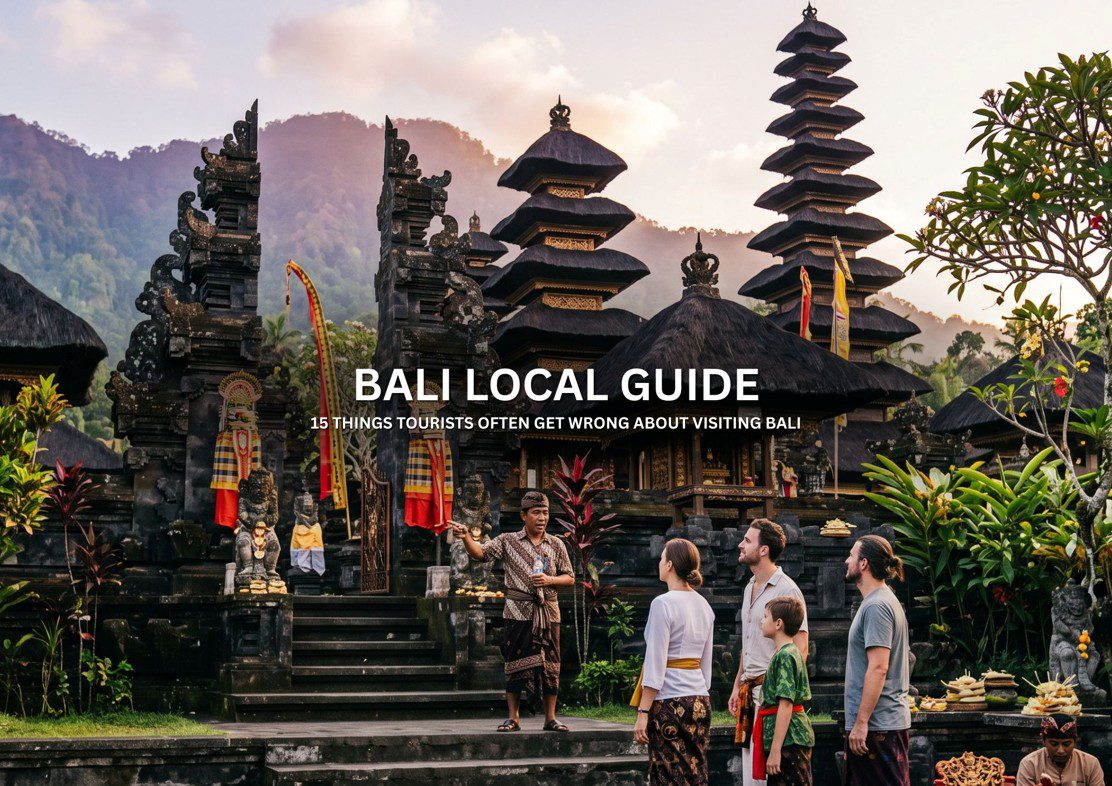
Planning your first trip to Bali? You may already know about the island’s famous beaches, beautiful temples, tropical weather and private pool villas. But there are a few things about visiting Bali that many first-time tourists only discover after they arrive.
Bali is not simply a tropical holiday destination. It is a living island with its own culture, religious traditions, traffic patterns, local customs and daily rhythms. Understanding these things before your trip can help you avoid common mistakes, save time and enjoy a more authentic Bali experience.
In this Bali Local Guide, we share 15 things tourists often get wrong about visiting Bali, from choosing where to stay and getting around the island to temple etiquette, Nyepi, local food and everyday travel tips.
1. Bali Is Not Just One Type of Holiday Destination
One of the most common mistakes first-time visitors make is treating Bali as one single destination. In reality, different parts of the island offer very different experiences.
Seminyak is popular for its beaches, restaurants, cafés, shopping, beach clubs and convenient location in South Bali. Canggu has a younger, more contemporary atmosphere with cafés, restaurants, surf spots and a large international community. Ubud offers rice fields, art, temples, wellness experiences and a more cultural atmosphere, while Sanur is generally more relaxed and popular with families and travellers looking for a quieter beach destination. Uluwatu is known for dramatic cliffs, beaches and spectacular sunsets.
Further from the main tourist centres, areas such as Amed, Sidemen and Munduk offer a slower and more rural side of Bali.
Local tip: Choose your accommodation based on the type of holiday you want. If you want restaurants, beaches, shopping and entertainment within easy reach, staying in Seminyak can be a convenient option.
2. Map Distance Does Not Always Equal Travel Time
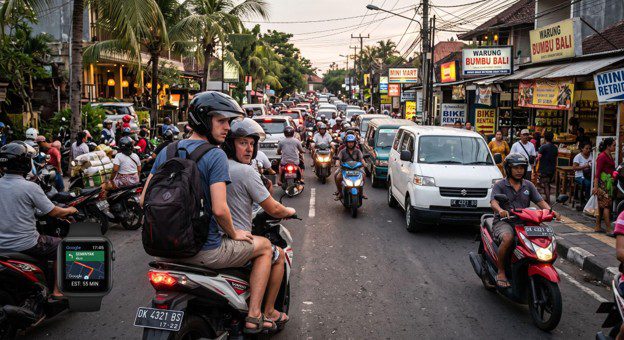
“How far away is it?” is not always the best question to ask when planning a Bali itinerary. A better question is, “How long will it take to get there?”
Traffic can have a major impact on travel times, especially in busy areas of South Bali. Road conditions, peak travel periods, weather and religious ceremonies can all affect journeys. Bali’s official tourism guidance also highlights traffic congestion and ceremonial processions as factors that can affect travel around the island.
A destination that looks only 10 kilometres away on Google Maps may take significantly longer to reach during busy periods.
Local tip: Group attractions by area instead of trying to visit places on opposite sides of the island in one day. You will spend less time in traffic and more time enjoying Bali.
3. You Don’t Need to Visit Every Famous Attraction
Bali has hundreds of attractions, from waterfalls and temples to rice terraces, beaches and viewpoints. It can be tempting to create a packed itinerary and try to see everything.
However, trying to visit too many places can make your Bali holiday exhausting.
Bali is often best experienced at a slower pace. Spend a morning exploring your local neighbourhood, enjoy lunch somewhere nearby, relax at your villa and head to the beach for sunset instead of rushing between five different attractions.
Local tip: A successful Bali holiday is not measured by how many attractions you visit. Leave some time in your itinerary for spontaneous discoveries and simply enjoying your surroundings.
4. Bali Is More Than Beaches

Bali’s beaches are one of its biggest attractions, but they are only one part of the island’s identity.
Bali is also known for its temples, ceremonies, traditional architecture, rice fields, arts, crafts, food and strong local communities. Visitors who spend their entire holiday between the beach, pool and beach club can miss an important part of what makes Bali unique.
During your trip, consider experiencing:
- Balinese temples and traditional architecture
- Local markets and neighbourhoods
- Balinese food and traditional warungs
- Rice terraces and rural landscapes
- Traditional dance and music
- Art and craft villages
- Spa and wellness experiences
- Local ceremonies and cultural traditions
Local tip: Combine relaxation with exploration. A few cultural and local experiences can add much more depth to a Bali holiday.
5. Balinese Temples Are Not Simply Tourist Attractions
Many of Bali’s temples are active places of worship, not simply sightseeing attractions. Visitors should dress appropriately, behave respectfully and follow the rules of each temple.
When visiting a temple, you may be required to wear a sarong and sash, and shoulders and knees should generally be covered. Visitors should also avoid stepping on canang sari, the small daily offerings found around Bali.
When visiting a Balinese temple, avoid:
- Wearing inappropriate clothing
- Entering restricted areas
- Touching religious objects without permission
- Disrupting ceremonies
- Speaking loudly in sacred areas
- Taking intrusive photographs
- Stepping on offerings
Local tip: If you encounter a religious ceremony, remember that it is not a performance for tourists. Observe quietly from an appropriate distance and follow local instructions.
6. Small Offerings on the Ground Are Not Rubbish
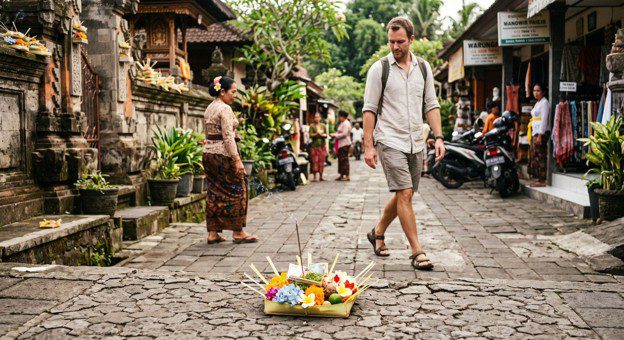
One of the first things many visitors notice in Bali is the small decorative offering placed outside homes, shops, restaurants, hotels and temples. These offerings are called canang sari and are an important part of Balinese Hindu daily life.
Because they can be placed on pavements, entrances and roadsides, tourists may accidentally step on them without realising what they are.
What should you do? Simply avoid stepping on them whenever possible. If you accidentally disturb one, don’t panic. The important thing is to understand their cultural significance and be respectful.
This small detail is one of the easiest ways for visitors to show awareness of local customs.
7. Nyepi Is Not a Normal Public Holiday
If you are planning to visit Bali around March, check the dates of Nyepi, the Balinese Day of Silence.
Nyepi marks the Balinese New Year and is very different from a typical New Year’s celebration. For approximately 24 hours, Bali observes a period of silence and restrictions on normal activities. Travel and many public activities stop, and Ngurah Rai International Airport also closes during Nyepi.
Visitors staying in Bali are expected to remain at their accommodation and respect the restrictions.
During Nyepi, you should expect:
- No normal travel around the island
- Closed businesses and attractions
- Very limited outdoor activity
- Reduced noise and lighting
- No normal airport operations
Local tip: If your holiday overlaps with Nyepi, speak with your villa or hotel in advance. Prepare food, drinks, medication and other essentials before the restrictions begin.
Rather than seeing Nyepi as an inconvenience, consider it an opportunity to experience one of Bali’s most unique cultural traditions.
8. You Don’t Always Need to Rent a Scooter
Scooters are one of the most common ways to travel around Bali, but renting one is not suitable for every visitor.
If you are not an experienced rider, Bali’s traffic can be challenging. Roads can be busy, unfamiliar, narrow and unpredictable. Foreign visitors should also follow Indonesian traffic regulations and use properly licensed and roadworthy transportation.
Depending on your plans, alternatives include:
- Private drivers: Ideal for families, groups and day trips
- Taxis and ride-hailing services: Convenient for shorter journeys where available
- Villa or hotel transfers: Useful for airport transfers and planned journeys
- Scooters: Best suited to experienced and properly licensed riders
Local tip: Don’t rent a scooter simply because other tourists do. Choose the transport option that makes you feel comfortable and safe.
9. Bali Does Not Always Follow a Strict Schedule
Visitors from countries with highly predictable schedules may find Bali’s daily rhythm different. Traffic can suddenly increase because of a ceremony. A journey may take longer than expected. Weather can change your plans, and popular restaurants or attractions may become busy at certain times.
This does not mean you should avoid planning your trip. It simply means that flexibility is important when travelling in Bali. A relaxed day might look like:
Morning: Explore the local area
Lunch: Enjoy a nearby restaurant
Afternoon: Relax at your villa
Late afternoon: Visit the beach
Evening: Have dinner nearby
Local tip: Avoid filling every hour of your holiday. Leaving some free time makes it much easier to adapt to traffic, weather and unexpected opportunities.
10. You Don’t Have to Change Hotels Every Few Days
Some travellers believe they need to move accommodation every two or three days to experience Bali. You don’t. Changing hotels frequently can mean spending more time packing, checking out and travelling between destinations.
For many travellers, choosing a comfortable base and taking selected day trips is a better option.
For example, Seminyak can work well as a base for exploring South Bali because it offers restaurants, beaches, shopping, cafés and entertainment while remaining connected to other popular destinations.
Local tip: For a one-week Bali holiday, consider staying in one or two areas rather than four or five. Less packing means more time enjoying your holiday.
11. Not Every Bali Beach Is the Same
Bali has many beautiful beaches, but they offer very different experiences. Some are better for surfing, some for swimming, some for sunsets and others for beachside dining or relaxing. Conditions can also change depending on the weather, tide and season.
Before visiting a beach, consider:
- Is it suitable for swimming?
- Is it mainly a surfing beach?
- How easy is it to access?
- Are restaurants or facilities nearby?
- Is it better for sunrise or sunset?
- What are the current weather and sea conditions?
Local tip: Don’t choose a beach only because it looks beautiful in an Instagram photo. Find out what the beach is actually best suited for.
12. You Don’t Have to Eat Only at Famous Restaurants
Bali has an excellent food scene, from fine dining and international restaurants to small family-run warungs.
While well-known restaurants can be worth visiting, some of the most memorable meals can come from smaller local places.
If you want to try traditional Balinese food, look for dishes such as:
- Nasi campur
- Ayam betutu
- Sate lilit
- Lawar
- Babi guling
- Balinese seafood
- Local sambal
Local tip: Ask your villa or hotel staff where they personally like to eat. Local recommendations can lead you to restaurants that may not appear on typical tourist lists.
13. Be Careful When Exchanging Money
Money exchange is another area where first-time visitors should pay attention. Use authorised money changers, banks or established exchange services and be cautious of locations offering rates that appear unusually attractive.
For everyday spending, carrying some smaller denominations of Indonesian Rupiah can also be useful, particularly for local restaurants, markets and smaller purchases.
Local tip: Count your money carefully before leaving the exchange counter and keep your cash secure while travelling.
14. Bali Has a Tourism Levy for Foreign Visitors
Foreign visitors to Bali are subject to a tourist levy, which supports efforts related to Bali’s cultural and environmental protection.
The levy can be paid through the official Love Bali system, including online payment options and designated payment points. Certain categories of foreign visitors may be exempt, so travellers should check the latest official requirements based on their visa or permit status.
Before travelling to Bali, it is also worth checking:
- Passport validity
- Visa requirements
- Bali tourist levy
- Current entry requirements
- Accommodation details
- Airport transfer
- Travel insurance
Local tip: Completing important travel requirements before departure can make your arrival in Bali much smoother.
15. The Best Bali Experience Comes From Respecting the Island
Perhaps the biggest misconception about Bali is that because it is a popular tourist destination, everything is designed around visitors.
Bali is not simply a holiday resort. It is home to families, communities, temples, traditions and daily religious practices.
As a visitor, you are entering someone’s home, workplace and community. Small gestures of respect therefore matter.
How to Be a Responsible Traveller in Bali
- Dress appropriately when visiting temples and sacred places.
- Respect religious ceremonies.
- Avoid touching or disturbing offerings.
- Follow local traffic rules.
- Do not litter.
- Respect local communities.
- Use licensed accommodation and transportation.
- Ask before photographing people or ceremonies.
- Learn a few simple Indonesian or Balinese greetings.
- Leave natural and cultural sites as you found them.
The official guidance for foreign tourists in Bali also emphasises respecting sacred places, local customs, appropriate dress, polite behaviour, traffic regulations and environmental responsibility.
Final Thoughts: Experience Bali Like a Traveller, Not Just a Tourist
The best Bali holiday is not necessarily the one with the longest itinerary.
Give yourself time to enjoy a slow breakfast, talk to your villa staff, try local food, explore the neighbourhood around your accommodation and watch a traditional ceremony respectfully from a distance.
Most importantly, remember that Bali is not simply a backdrop for your holiday. It is a living island with a rich culture, strong traditions and local communities.
Travel with curiosity, respect the local way of life and give yourself enough time to slow down. That’s when Bali starts to feel less like a checklist of attractions and more like a place you have genuinely experienced.
Stay in the Heart of Seminyak
Looking for a comfortable base for your Bali holiday? Villa Bugis Seminyak offers private villas in the heart of Seminyak, putting you close to beaches, restaurants, cafés, shopping and the area’s vibrant atmosphere while giving you a private space to relax.
Explore Villa Bugis Seminyak and find the right private villa for your next Bali holiday.
Book direct & save more:
📞 +62 812-3683-2838
📍 The Ideal Holiday Villas in Seminyak, Bali


