
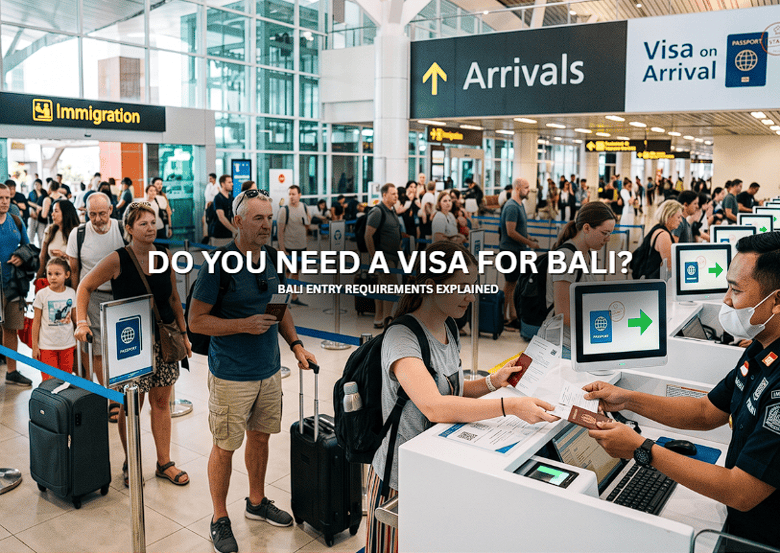
Planning a Bali holiday and wondering, “Do I need a visa for Bali?” Understanding the latest Bali entry requirements is one of the most important things to check before booking your flights, accommodation, and activities.
Bali is one of the world’s most popular tropical destinations, welcoming visitors from around the globe for beach holidays, cultural experiences, wellness retreats, family vacations, honeymoons, and longer stays. However, visa requirements for entering Bali depend on your nationality, the purpose of your visit, and how long you plan to stay in Indonesia.
For most travelers, entering Bali is relatively straightforward. However, you should make sure your passport, visa, and other required documents are prepared before you travel.
In this guide, we explain what you need to know about Bali visa requirements, passport validity, tourist visas, visa-free entry, the Visa on Arrival, and other important Bali entry requirements to help you prepare for a smooth and stress-free holiday.
Do You Need a Visa to Visit Bali?
For many international travelers, a visa is required to enter Indonesia for a holiday in Bali. Depending on your nationality, you may be eligible for visa-free entry, a Visa on Arrival (VoA), or an electronic Visa on Arrival (e-VoA).
The rules can vary depending on your passport and the purpose of your trip. If you are visiting Bali for tourism, the most common option for eligible travelers is the Visa on Arrival, which allows you to enter Indonesia for a short holiday.
Before traveling, it is important to check the current requirements that apply specifically to your nationality. Immigration policies can change, so travelers should always verify the latest information through official Indonesian immigration sources before their trip.
If you are planning to stay in Bali for longer than the standard tourist period, you may need a different type of visa or an extension, depending on your circumstances.
What Are the Main Bali Entry Requirements?
Before departing for your Bali holiday, make sure you have the necessary travel documents ready.
The requirements may vary depending on your nationality and visa type, but travelers should generally prepare the following:
1. A Valid Passport
Your passport must meet Indonesia’s minimum validity requirements at the time of arrival.
It is important to check your passport expiry date well before your Bali travel dates. Airlines may also check your documents before allowing you to board your flight.
If your passport is close to expiring, consider renewing it before booking your trip to Bali.
2. The Correct Visa or Entry Permission
Depending on your nationality and travel purpose, you may need:
- Visa-free entry, if eligible
- Visa on Arrival (VoA)
- Electronic Visa on Arrival (e-VoA)
- Another appropriate Indonesian visa for longer or different types of stays
For a typical tourist visiting Bali for a short holiday, the Visa on Arrival or e-VoA is one of the most common options for eligible nationalities.
Always check the latest rules before your trip because visa policies and eligible countries can change.
3. Return or Onward Travel
Travelers may be asked to provide proof of onward or return travel.
This is generally used to demonstrate that you plan to leave Indonesia within the permitted period of your stay.
Having your return flight or onward ticket easily accessible can make the arrival process more straightforward.
4. Arrival and Customs Requirements
Travelers arriving in Bali may need to complete the required arrival and customs declarations.
You should also ensure that you comply with Indonesian customs regulations regarding the items you bring into the country.
Preparing these requirements before you fly can help you spend less time dealing with paperwork when you arrive at Bali’s airport.
What Is a Bali Tourist Visa?
When people search for a Bali tourist visa, they are usually referring to the visa or entry permission that allows them to visit Indonesia for tourism. Bali is part of Indonesia, so there is technically no separate “Bali visa.” Instead, travelers enter Indonesia under Indonesian immigration regulations and then travel to Bali.
For tourists, the most common short-term option available to eligible nationalities is the Visa on Arrival or electronic Visa on Arrival. This type of visa is designed for travelers visiting Indonesia for purposes such as tourism and allows eligible visitors to stay for a limited period.
If you are planning a standard Bali holiday, it is important to understand the permitted length of stay and whether your visa can be extended.
What Is the Visa on Arrival for Bali?
The Visa on Arrival, commonly known as VoA, is one of the most popular entry options for eligible international visitors traveling to Bali. Depending on the applicable regulations, eligible travelers can obtain a Visa on Arrival when they arrive in Indonesia or apply for an electronic Visa on Arrival before their trip.
The e-VoA can be particularly convenient for travelers who prefer to prepare their documents before flying. However, eligibility, fees, permitted activities, and stay periods can change. Always check the latest official Indonesian immigration information before your Bali travel.
Can You Extend a Bali Tourist Visa?
In some circumstances, travelers holding an eligible tourist visa may be able to extend their stay in Indonesia. This can be useful if you initially planned a short Bali holiday but decide that you want to spend more time exploring the island.
For example, you might arrive in Bali planning to stay for a few weeks but later decide to extend your trip to enjoy more of the island’s beaches, temples, rice fields, restaurants, and cultural experiences. However, visa extensions are subject to specific immigration rules and conditions. You should not assume that every visa can be extended automatically.
If you want to stay in Bali longer than your initial permitted period, make sure you understand the extension process and apply before your current stay expires. Overstaying your permitted period can result in penalties and other immigration issues.
Can You Visit Bali Without a Visa?
Whether you can enter Bali without a visa depends on your nationality and the current Indonesian immigration rules. Some nationalities may qualify for visa-free entry for specific purposes and periods, while others may need to obtain a Visa on Arrival or another type of visa.
Because visa-free eligibility can change, travelers should always check the latest official information before their Bali holiday. Do not rely solely on information from old travel blogs or social media posts, as visa regulations may have changed since the article was published.
Do Children Need a Visa to Visit Bali?
Visa requirements generally apply to travelers based on their nationality and immigration status, including children. If you are traveling to Bali with your family, make sure that every traveler has the appropriate passport and entry permission.
Families should also check whether children require separate visa applications or documents. If you are planning a family holiday in Bali, it is a good idea to organize all travel documents before departure so the arrival process is easier for everyone.
Do You Need Travel Insurance for Bali?
Travel insurance is not the same as a visa requirement, but it is strongly worth considering when planning your Bali travel. A good travel insurance policy may help protect you against unexpected situations such as:
- Flight cancellations or delays
- Lost or delayed luggage
- Medical emergencies
- Accidents
- Trip interruptions
- Other unexpected travel problems
Bali is generally an easy destination to explore, but unexpected events can happen anywhere. Travel insurance can give you additional peace of mind, particularly if you are planning an extended trip, traveling with children, or participating in activities such as surfing, diving, or other adventure experiences.
What Happens When You Arrive in Bali?
Most international travelers arrive in Bali through Ngurah Rai International Airport, also known as Bali’s international airport. After landing, you will generally go through the required immigration and arrival procedures before collecting your luggage and continuing through customs.
The exact process will depend on your nationality, visa type, and current Indonesian immigration procedures. To make your arrival smoother, keep your important documents easily accessible, including:
- Passport
- Visa or e-VoA documentation, if applicable
- Return or onward flight details
- Accommodation information
- Other required travel documents
Once you complete the arrival process, you can begin your Bali holiday and travel to your accommodation.
Stay in Seminyak with Villa Bugis Seminyak
If you are planning to stay in Seminyak during your Bali holiday, Villa Bugis Seminyak offers a comfortable and private way to experience one of Bali’s most popular destinations.
Seminyak is well known for its beautiful beach, excellent restaurants, stylish cafes, beach clubs, shopping, and vibrant nightlife. Staying in a private villa allows you to enjoy the best of Seminyak while having your own peaceful space to relax after exploring the island.
For families, couples, and groups of friends, Villa Bugis Seminyak offers spacious private villas designed for a relaxing Bali holiday. With private swimming pools, generous living spaces, and a convenient location, you can enjoy the freedom and privacy of a villa while remaining close to the attractions that make Seminyak so popular.
If you are looking for a place to stay in Bali that combines privacy, comfort, space, and a convenient location, consider staying in Seminyak with Villa Bugis Seminyak for your next Bali holiday.
Explore Villa Bugis Seminyak and find the right private villa for your Bali getaway.
Frequently Asked Questions About Bali Visa Requirements
1. Do I need a visa to visit Bali?
It depends on your nationality and the purpose and duration of your trip. Many eligible tourists can enter Indonesia using a Visa on Arrival or electronic Visa on Arrival, while some nationalities may qualify for visa-free entry.
2. Is there a separate visa for Bali?
No. Bali is part of Indonesia, so travelers follow Indonesian immigration and visa regulations rather than having a separate Bali visa.
3. How long can tourists stay in Bali?
The permitted length of stay depends on the type of visa or entry permission you receive. Always check the conditions of your specific visa before traveling.
4. Can I extend my tourist visa in Bali?
Some eligible tourist visas may be extendable, depending on the current immigration regulations and conditions. If you plan to stay longer, make sure you understand the extension process before your initial permitted stay expires.
5. What documents do I need to travel to Bali?
Travelers generally need a valid passport and the appropriate visa or entry permission, if required. You may also need proof of onward or return travel and other documents depending on your nationality and current entry regulations.
6. Do I need to pay a tourist tax when visiting Bali?
International tourists visiting Bali are subject to a tourist levy that is separate from visa or immigration fees. Check the latest official requirements before your trip.
7. Should I check Bali visa requirements before booking my holiday?
Yes. Visa and entry regulations can change, so checking the latest requirements before booking flights and accommodation is recommended. Always confirm the rules that apply to your specific nationality.


